New pop-upPocket Rice every Friday at Bay Grocer. Read more→

The makers behind our table

We shape onigiri by hand at the markets around Byron Bay. The nori around them and the salt on our hands come from small makers in Japan who have spent generations on one craft, and so does the pot we recommend for cooking rice at home. These are the people behind them.

A mustard Matsusho donabe on a wooden table with Ichiryūhama nori, rice bowls, lacquered bowls and chopsticks.
A Matsusho donabe and Ichiryūhama nori, set for dinner

松庄

Matsusho

Shigaraki, Kōka, Shiga Prefecture

Matsusho is a family kiln in Shigaraki, now run by the eighth generation to carry the name Shōzaemon. Around four million years ago this valley sat at the bottom of an ancient Lake Biwa. The old lakebed left behind a clay full of organic matter, soft enough to shape well and tough enough to sit over a flame — which is why potters have been firing here since the Kamakura period, more than seven centuries ago.

Today Matsusho fires with gas, but the way of thinking is the old one: watch how heat and flame travel through the kiln, and let that leave its mark on each piece. It is where Shigaraki’s warm scorch marks and glassy patches of glaze come from, and why no two pots come out quite the same.

Shigaraki Station platform lined with dozens of ceramic tanuki statues, with green hills behind.
Shigaraki Station, where ceramic tanuki line the platform

Inside the workshop

What we saw on our visit to Matsusho, from the kiln back to the clay.
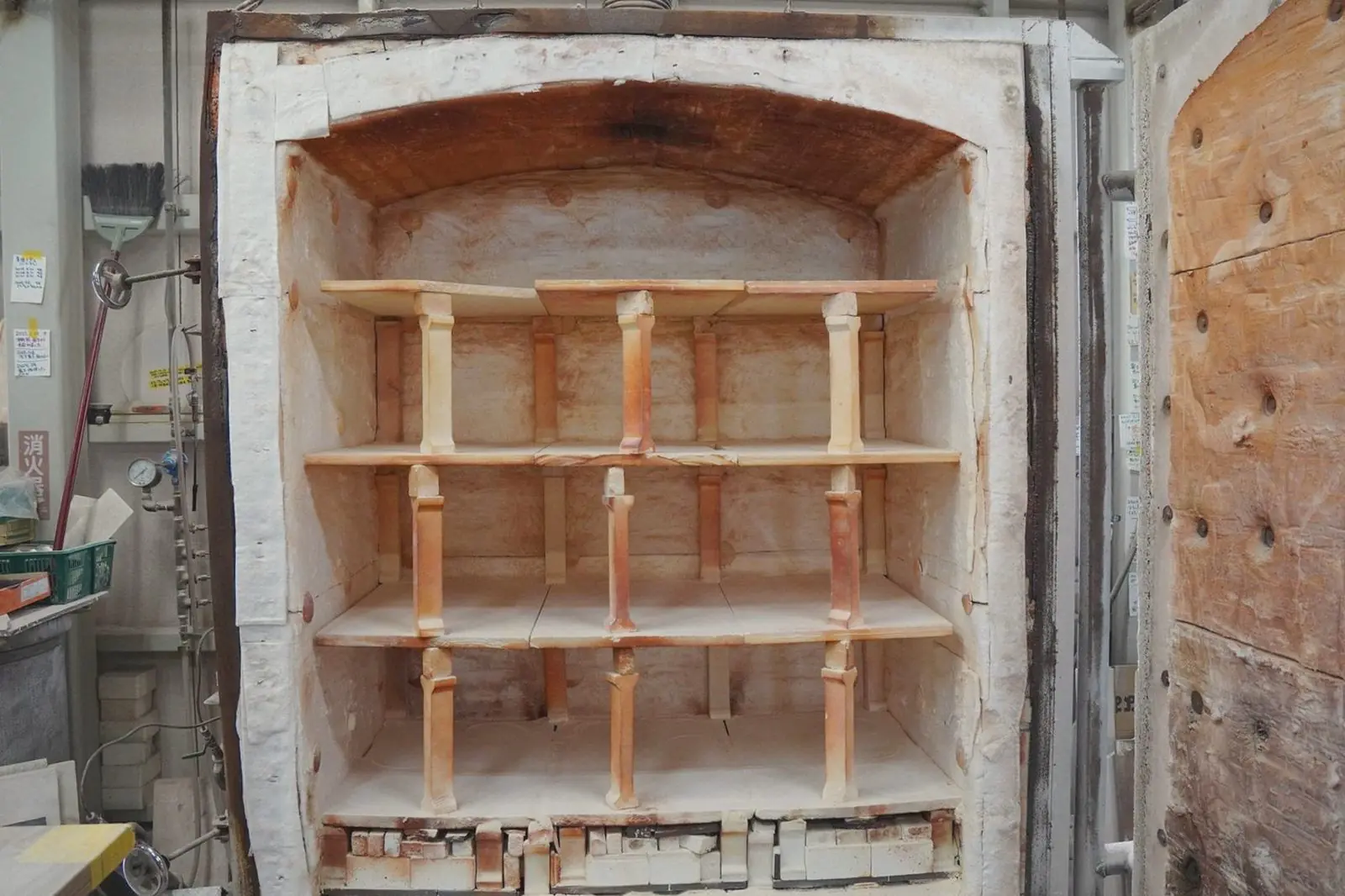
  1. The open door of a kiln, showing shelves and clay posts inside.

    FiringShelves are stacked inside the kiln, ready for the next firing. The way flame and heat move through the kiln is what gives every Shigaraki pot its own colour.
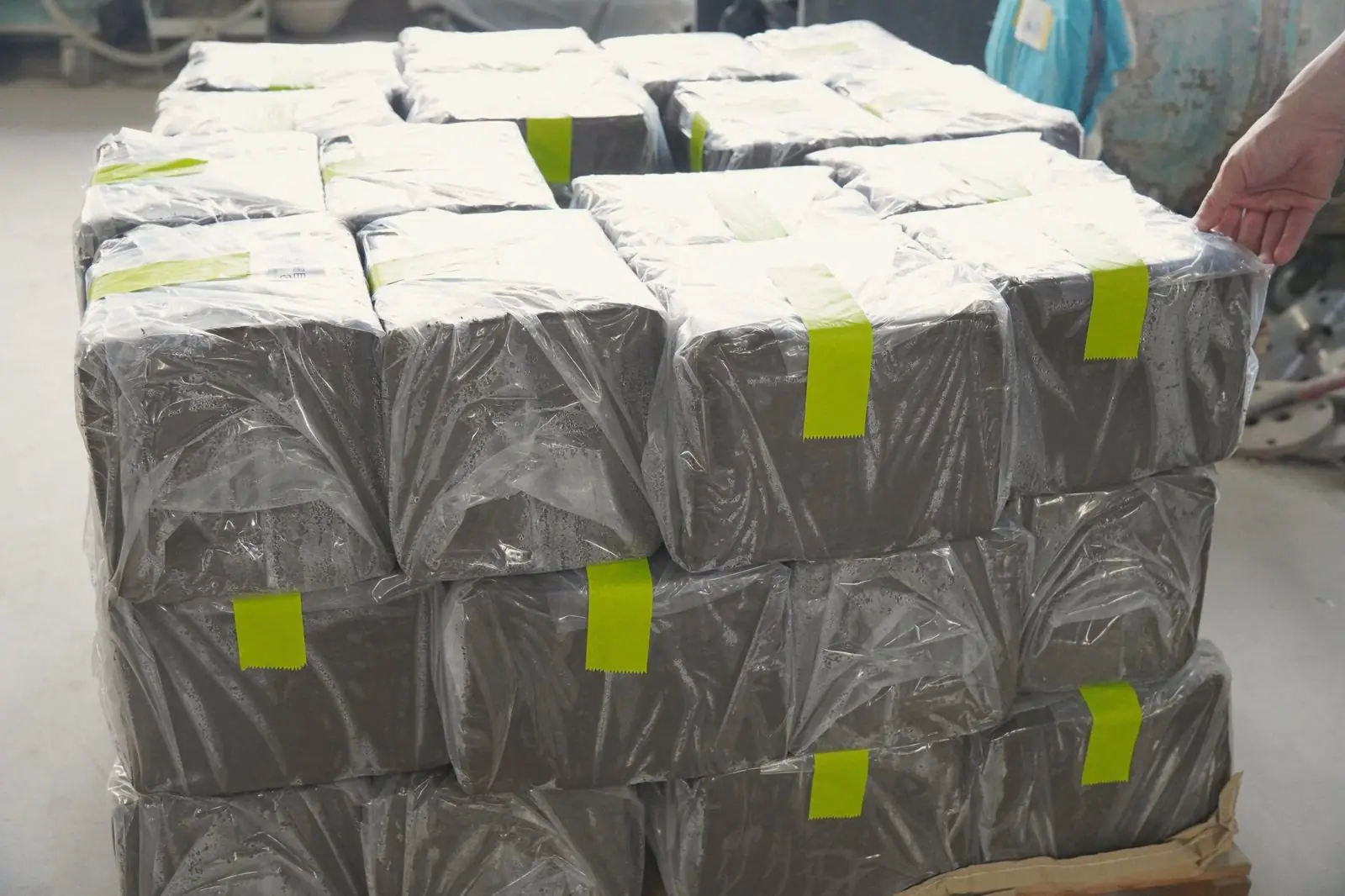
  2. Blocks of grey Shigaraki clay wrapped in plastic and stacked on a pallet.

    ClayShigaraki clay arrives in blocks, wrapped to keep it from drying out.
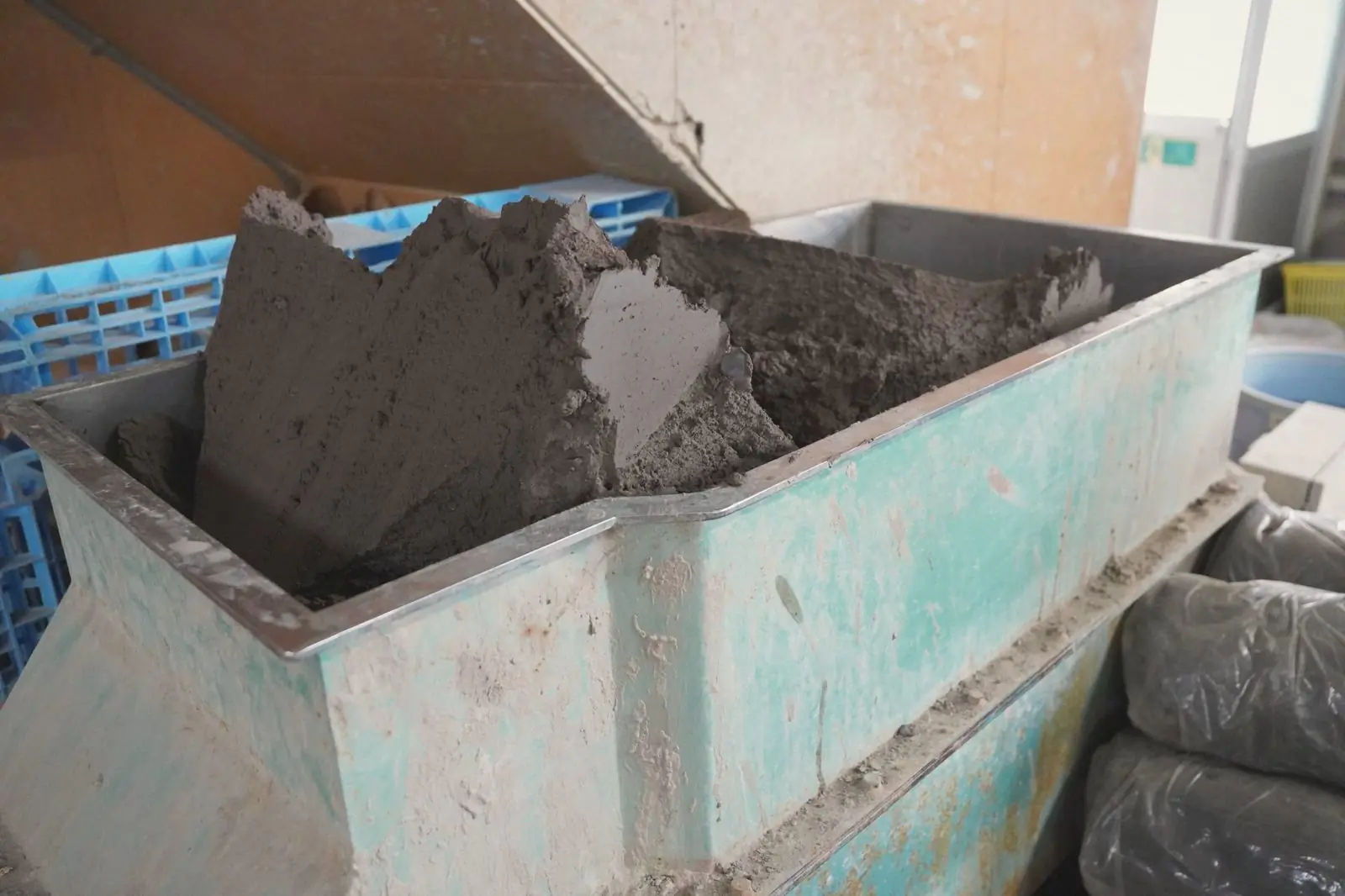
  3. Dark clay being prepared in a large metal hopper at the workshop.

    PreparingIt is worked until the body is even, so the pot heats evenly too.
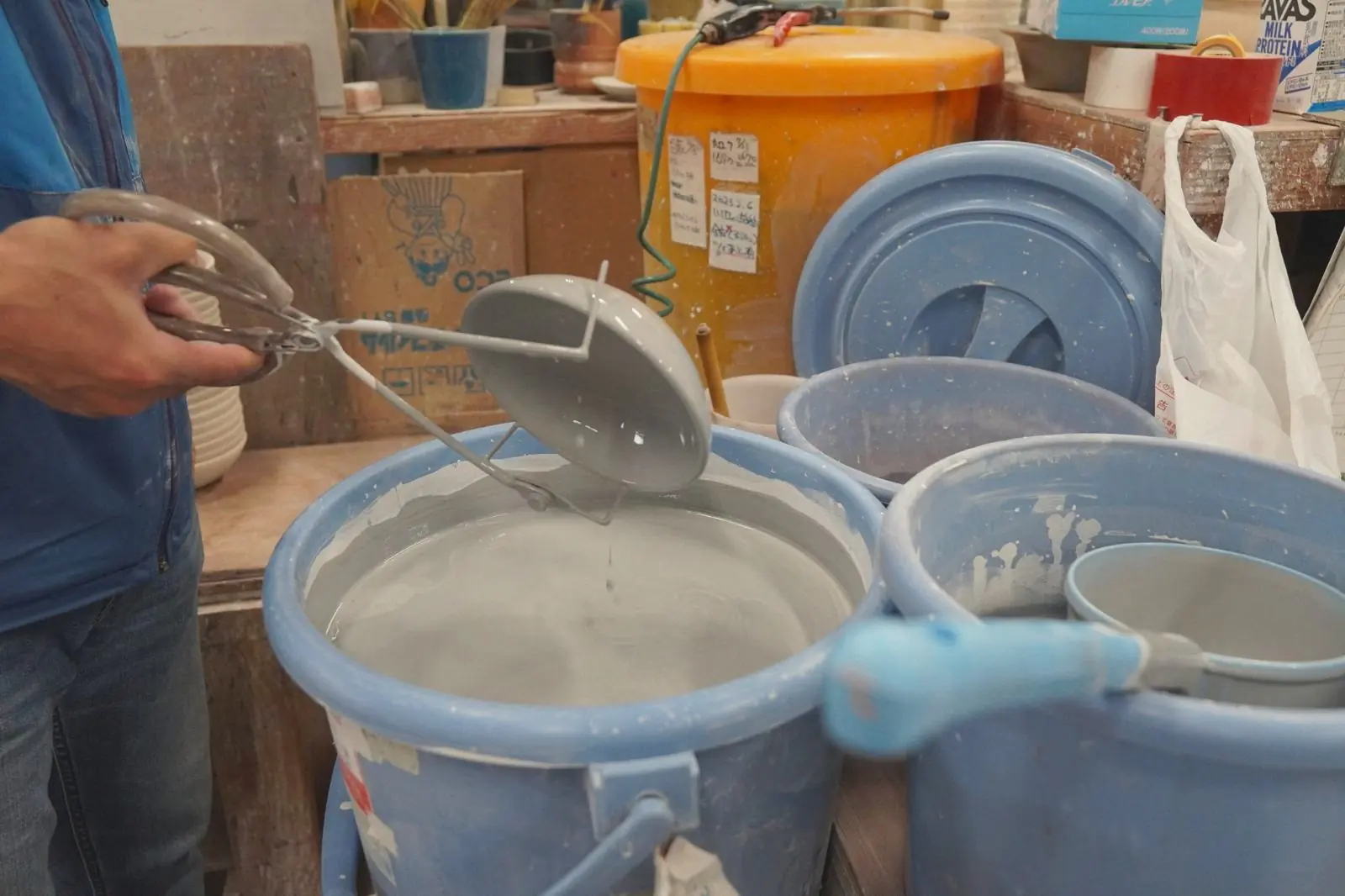
  4. A craftsman holding a lid with tongs and dipping it into a bucket of grey glaze.

    GlazingEach lid is dipped in glaze by hand, held with long tongs.

The Matsusho workshop building in Shigaraki with the kiln's name painted on the wall.
The workshop in Shigaraki, signed by the eighth-generation kiln

The Matsusho rice donabe

The pot we recommend for cooking rice for onigiri at home. Thick Shigaraki clay heats slowly and holds that heat, so the grains cook through evenly, stand up on their own and taste sweeter, and the bottom can catch a light, toasty crust the Japanese call okoge. Left on the stove or the table, it is a beautiful thing to live with.

Glaze
Made in
Shigaraki, Shiga Prefecture, Japan
Cooks on
Gas and open flame. Not suitable for induction.
Comes with
Our English guide to cooking rice in a donabe
Sizes and prices
Coming soon to our shop

Donabe are on their way to our shop

In the meantime, ask us about cooking with one at our market stall.

A Matsusho donabe in natural glaze seen from above.
Natural glaze, with nori and bowls for scale
The mustard Matsusho donabe on a wooden table against a plain wall.
The olive Matsusho donabe on a wooden table against a plain wall.
Rows of nori poles standing in the still water of the Ariake Sea at dawn.
Nori poles on the Ariake Sea at first light

一流浜

Ichiryūhama

Ōdakuma, Ariake Sea, Saga Prefecture

Ichiryūhama is the nori of the Ōdakuma branch of the Saga Ariake Sea fisheries cooperative. The name is an old fishermen’s word for the richest kind of water, where a river’s fresh water runs into the sea. Ōdakuma’s nori beds sit right where two rivers, the Chikugo — the largest in Kyushu — and the Hayatsue, pour into the Ariake Sea, carrying the goodness of the mountains with them.

The farmers string their nets between thousands of poles set into the tidal flats. Ichiryūhama uses only the first picking of the season, harvested once a year, when the nori has taken in the most from the water. It is soft, deep in colour and naturally sweet, and it seems to melt as you bite. Only the top two grades go under the Ichiryūhama name.

Nori is the first thing you taste when you bite into an onigiri, so it was the first thing we wanted to get right. Ichiryūhama is the nori we wrap our onigiri in at the stall.

From the sea to the sheet

How Ichiryūhama nori is grown, made and packed in Ōdakuma.

  1. Dark nori hanging from nets above the water, lit from behind.

    GrowingNori grows on nets strung between poles in the shallow Ariake Sea.

  2. Two farmers in waterproofs working a small boat under the nori nets.

    HarvestingFarmers work their way along the nets by boat, gathering the first picking.

  3. Chopped nori being stirred in a tank of water.

    MixingThe fresh nori is washed, chopped and stirred in water.

  4. Rows of square nori sheets on frames moving through a drying machine.

    FormingIt is poured into square frames and dried into sheets, much like paper.

  5. A gloved hand holding a sheet of nori up to the light, glowing green.

    CheckingSheets are held up to the light to check their colour and texture.

  6. Two workers in caps and masks bundling stacks of nori sheets with paper bands.

    Grading and packingGraded sheets are bundled, banded and packed for the cooperative.

A smiling nori farmer in a blue jacket standing in the water beside a harvesting boat.
Nori farmers in Ōdakuma, on the Ariake Sea
Tomoyo, owner of Pocket Rice, holding up a pack of Ichiryūhama nori beside a table stacked with more packs.
Tomoyo, owner of Pocket Rice, with a fresh delivery of Ichiryūhama nori

んまか塩

Nmaka salt

Yuriya salt works, Kamigoto, Goto Islands, Nagasaki Prefecture

On the Goto Islands, off the west coast of Nagasaki, people say “nmaka” when something tastes good. Yuriya salt works on Nakadōri Island gave that word to its salt.

Their seawater comes from the narrow strait between Nakadōri and the small island of Kashiragashima, where strong currents bring fresh water in from the Goto-nada sea on every rising tide. Kashiragashima’s village and its stone church are part of the UNESCO World Heritage listing for the Hidden Christian sites of Nagasaki.

The salt is boiled down slowly over a wood fire and finished by hand. It takes so long that the salt works makes only about 150 kilograms a month.

A salt-only onigiri has nowhere to hide, so we tasted salts from all over Japan before choosing. Nmaka’s large, soft crystals taste round rather than sharp, and they bring out the sweetness of the rice instead of covering it. It is the salt we wet our hands with before shaping every onigiri.

From the sea to the salt

How Yuriya turns Goto seawater into Nmaka salt, as they describe it.

  1. Drawing the water. Clean seawater is pumped from the strait beside Kashiragashima.
  2. Concentrating in the wind. Over several days the water is sprayed over nets hung in tall towers, and the steady island wind evaporates it from about 3% salt to about 10%. It is filtered as it circulates, which removes microorganisms and microplastics.
  3. Boiling over wood. The brine is moved to flat pans over a wood fire and boiled down to about 20% salt, around a seventh of the water they started with.
  4. Simmering for two days. Filtered again, the brine is kept just below the boil, day and night, for about two days. Too much heat and the crystals stay small; slow heat makes large, mellow crystals.
  5. Crystallising. When the brine has halved, thin crystals form on the surface, spread and sink. They are scooped into bamboo baskets as they fall.
  6. Draining. The salt is wrapped in cloth and left for several days so the bitter liquid, nigari, drips away, then spun dry, keeping just enough nigari for balance.
  7. Checking and packing. It is sieved for size, checked by hand in the sun for ash or hard lumps, and packed.
A flat iron pan of steaming brine over a wood fire in a small salt shed. Image for illustration, not a photo of Yuriya salt works.
Boiling the brine over a wood fireImage for illustration only, not a photo of Yuriya salt works.
Salt crystals forming on simmering brine, beside a bamboo basket of freshly scooped salt. Image for illustration, not a photo of Yuriya salt works.
Crystals forming and being scooped into a bamboo basketImage for illustration only, not a photo of Yuriya salt works.
A pouch of Nmaka salt from Yuriya salt works, with coarse white crystals.
Nmaka salt, coarse and wood-fired
Seven bags of Japanese sea salt from different regions lined up on a wooden floor.
Some of the salts we compared, from Okinawa to Hokkaido

A short guide to Japanese salt

Most everyday table salt in Japan is made industrially, by concentrating seawater through membranes and evaporating it under vacuum. Alongside it, small makers around the coast still make salt by older methods, and each one tastes a little different.

Wood-fired
Seawater boiled down slowly in pans over a fire.Nmaka salt, Goto Islands, Nagasaki
Sun-dried
Brine left to crystallise slowly in greenhouses over weeks.Tosa Kuroshio sun-dried salt, Kōchi
Deep-sea water
Made from water drawn from far below the surface.Kumi no Shio, Kumejima, Okinawa; Shinkai no Hana, Muroto, Kōchi
Seaweed salt
Moshio, an ancient method that uses seaweed with the seawater, giving a light beige colour.Ama no Moshio, Kamikamagari Island, Hiroshima
Cold northern seas
Made only from the seawater of the far north.Okhotsk sea salt, Hokkaido